Sore nipples while breastfeeding – why this happens so often
Breastfeeding looks so easy from the outside. Just latch the baby on, cuddle, and you're done. But reality is often different, and breastfeeding is something we all have to learn. It was probably a bit easier in the past – people saw others breastfeeding much more often; they were surrounded by mothers, aunts, and friends who could show them how it's done, what to do when challenges arose, and what really helps with sore nipples.
Today, we're mostly left to our own devices when it comes to these questions, and knowledge isn't passed on casually anymore. And suddenly you're lying there with your baby and you realize: This isn't as intuitive as I thought.
How common are sore nipples during breastfeeding?
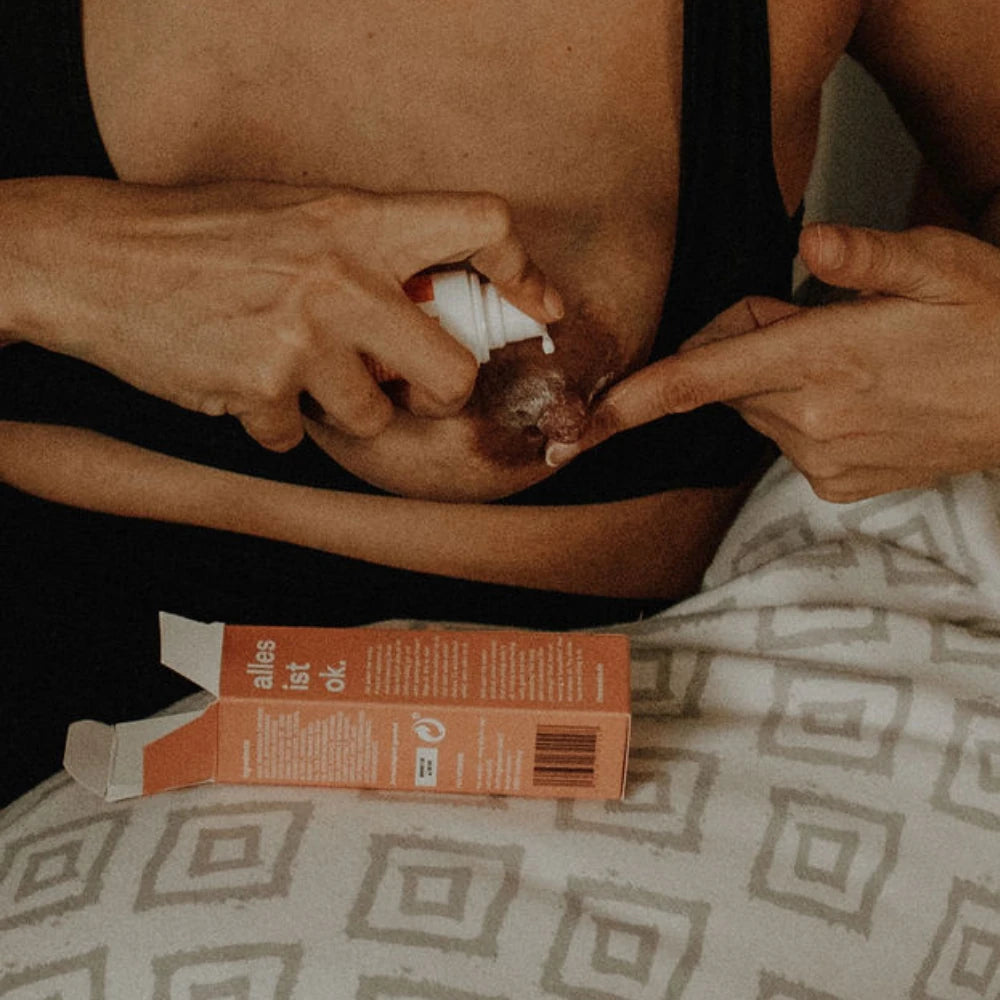
Almost every breastfeeding woman knows this: In the first few days, the nipples are sensitive or sore. Up to 80% of breastfeeding mothers report this – so you're definitely not alone.
Often it's a combination of unfamiliar strain, very frequent drinking in the beginning, and sometimes a less-than-ideal latching position. This can be quite painful and frustrating.
What can help if breastfeeding hurts?
Besides calm, patience and support, small aids can make the difference:
Silver caps for sore nipples
You may have heard of them: small caps made of real silver that are placed on the nipple between feedings. Silver has antibacterial and anti-inflammatory properties and supports healing – all without creams or ointments.
When buying nipple shields, make sure they aren't too tight. A little space between the shield and your skin is good because it prevents the nipple from becoming soggy.
Cleaning: Rinse briefly with water after each use; that's usually sufficient. And sterilize by boiling every few days if desired.
Air and light: Let your nipples air dry as often as possible. Sounds simple, but it helps a lot.
When you should seek support
If you notice that things just aren't getting better, that you're tensing up, or already dreading the next feeding, seek support. A lactation consultant or midwife can assess the situation to determine if it's related to latching or something else. Sometimes small adjustments are all it takes to make things much easier.
Painkillers are also perfectly fine, and your midwife or lactation consultant can advise you on which medications can be taken while breastfeeding.
In short:
Breastfeeding is a learning process. It can hurt at the beginning – that doesn't mean you're failing. Give yourself time, ask for help, and use aids like nipple shields. It usually gets much better after a short time.